Filter By:
Tech Debt Burndown Podcast S3E5: Cloud vs On-Premises
In episode five of this season of the Tech Debt Burndown podcast, Chris Swan and Nick Selby dive into the widespread misunderstandings and economic realities of choosing between cloud and on-premises infrastructure. They discuss how cloud service providers have driven organizations to perform “lift-and-shift” migrations that replicate messy data center environments in the cloud. Rather than achieving the promised cost savings and agility, these organizations inherit the same technical debt while facing skyrocketing bills and unexpected administrative costs in areas like logging, compliance, and observability. They also highlight that while the cloud is invaluable for early-stage startups and rapid feature deployment, it can quickly become cost-prohibitive without proper optimization, architecture, and governance.
Read more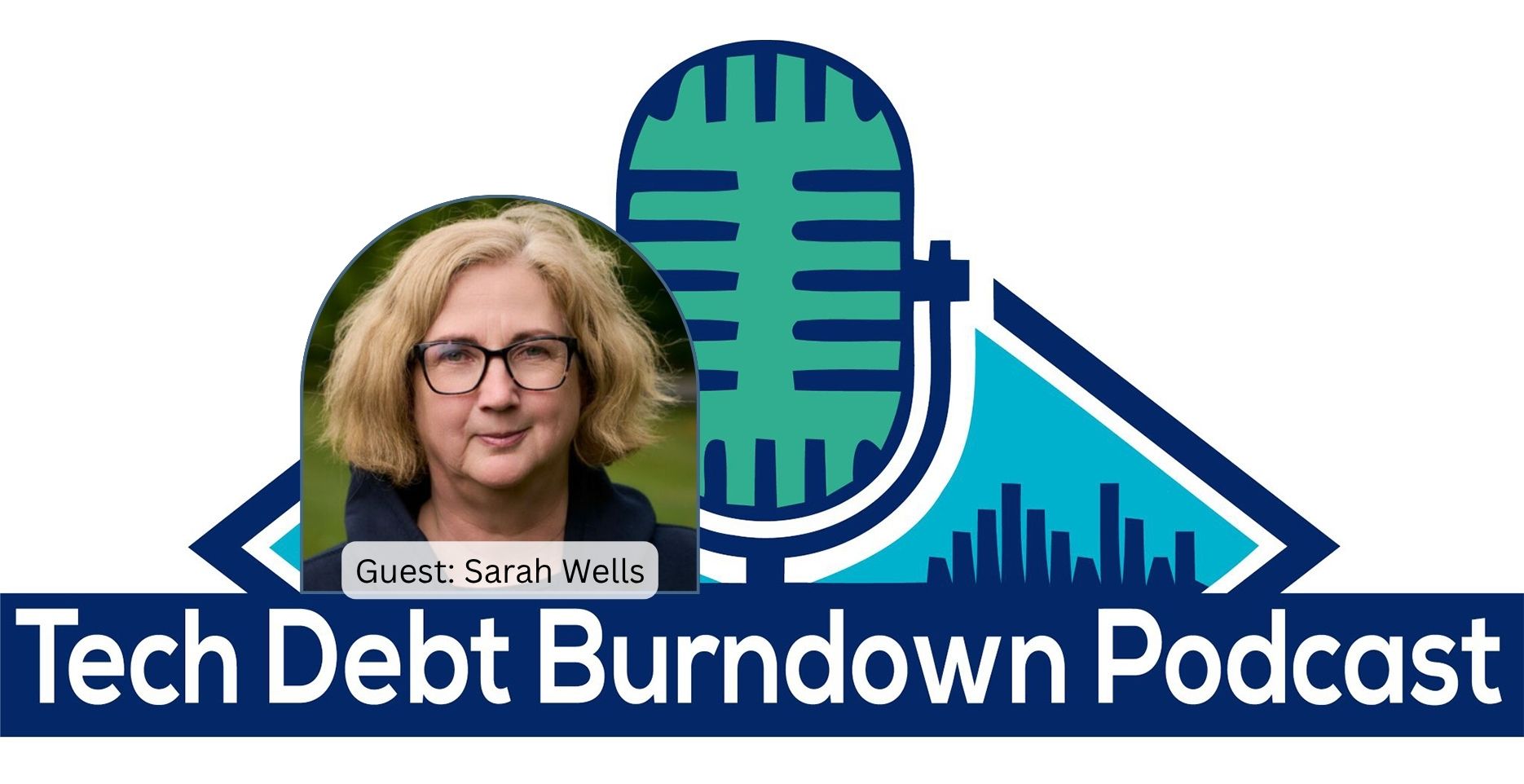
Tech Debt Burndown Podcast S3E4: Sarah Wells
In the fourth episode of season three of the Tech Debt Burndown podcast, Sarah Wells joins Chris Swan and Nick Selby to talk about the lessons learned from her decade at the Financial Times, and their journey to implementing microservices (the same lessons that informed her book, “Enabling Microservices Success).” We touch on whether the purpose of microservices is to scale a system, or to scale an engineering organisation. By breaking down monoliths into independent domains, teams can reduce cognitive complexity and release software hundreds of times a day. Sarah warns, however, that this shift introduces a “maintenance treadmill,” requiring robust automation for library upgrades, security patching, and cross-service governance to prevent a sprawl of unmanageable tech debt.
Read more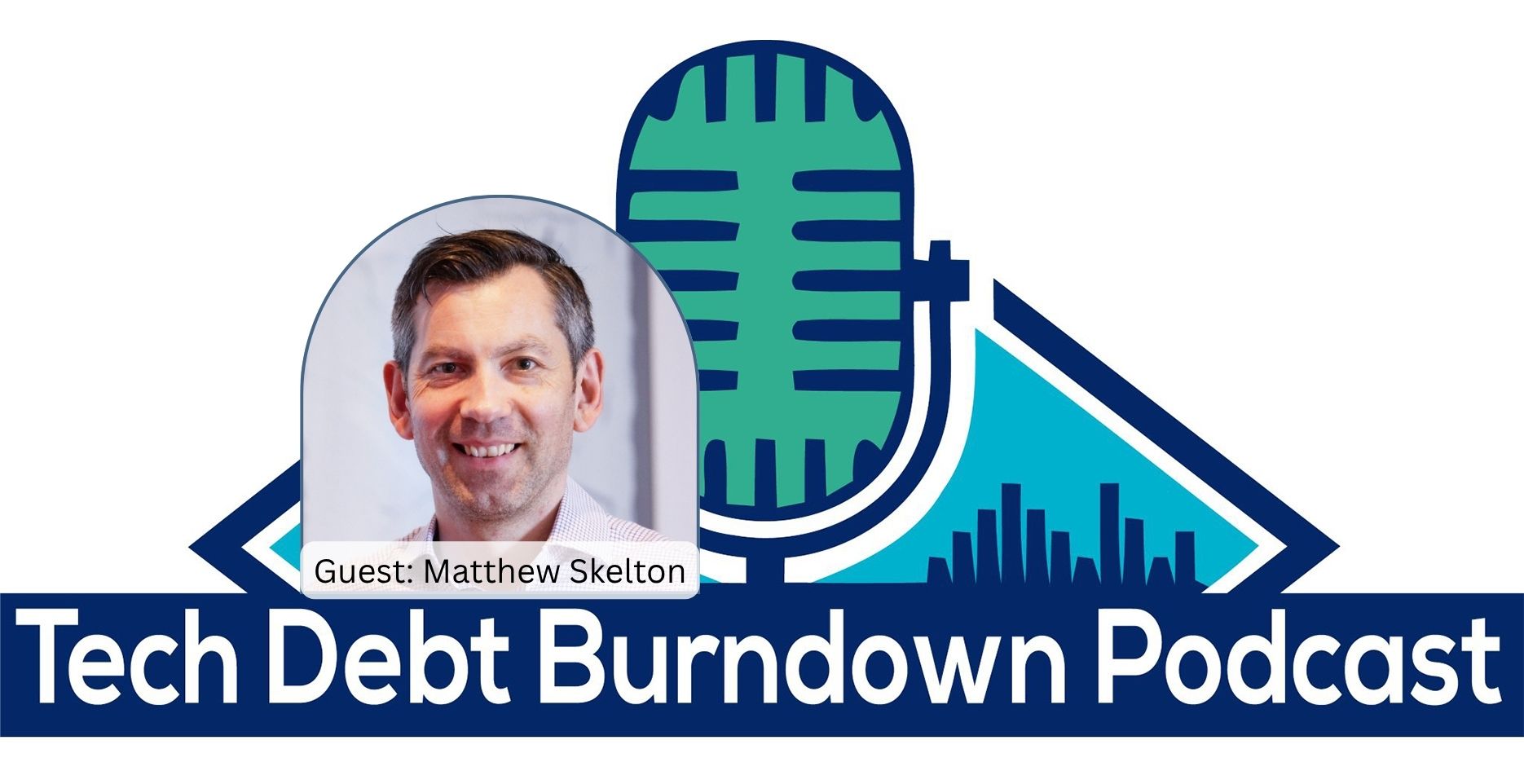
Tech Debt Burndown Podcast S3E3: Matthew Skelton
In episode three of season three of the Tech Debt Burndown podcastTeam Topologies co-author Matthew Skelton joins Chris Swan and Nick Selby to discuss the relationship between tech debt and cognitive load. Matthew explains that every organization has a finite “cognitive load budget,” and technical debt acts as a constant drain on this capacity, creating friction that slows down development and increases operational risk. By framing tech debt in terms of human cognition and team boundaries, the discussion highlights how healthy software evolution depends on keeping systems understandable and manageable for the people who build and run them.
Read moreTech Debt Burndown Podcast S3E2: AI Coding Assistants
In episode two of this season of the Tech Debt Burndown podcast, Chris Swan and Nick Selby chat about how AI Coding Assistants have suddenly become very good, maybe even good enough to write “load bearing” code. The constraints that existed around producing code have potentially disappeared, but other constraints live on, and we’re still finding out what this means for product management.
Read moreTech Debt Burndown Podcast Series 3 E1: Tech Debt as a Service
Tech Debt as a Service (Welcome to the Slopocene) After a long hiatus, the Tech Debt Burndown podcast has returned for its third season. We’ve got a bunch of episodes (some recorded quite a while ago) in the can, so more to come; along with some fresh stuff, as 2026 has been a wild ride already.
Read more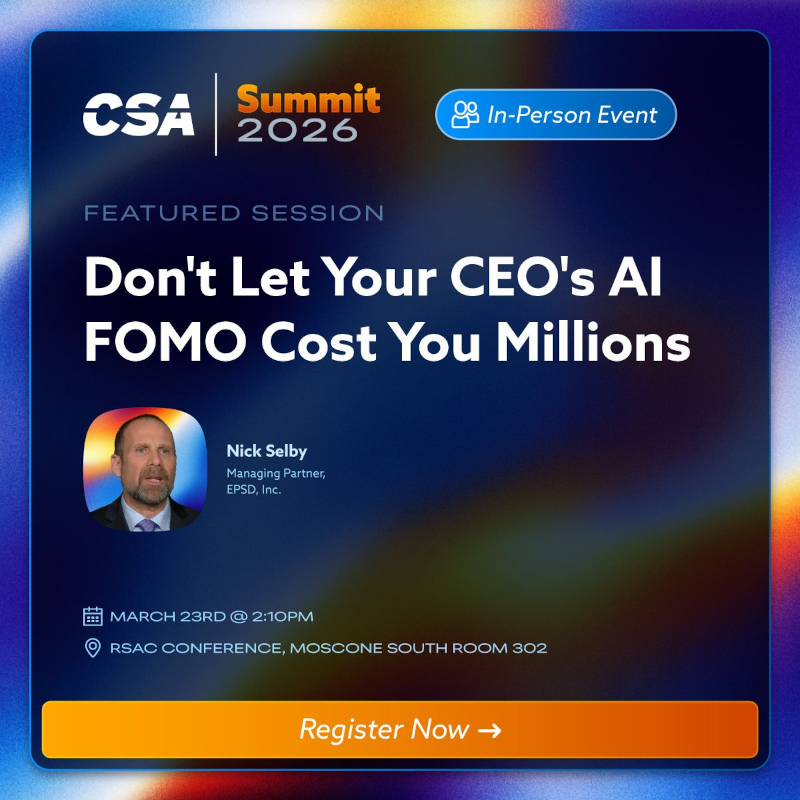
Nick Selby at the CSA Summit at RSAC 2026
This is the presentation that Nick Selby gave at Cloud Security Alliance CSA Summit at RSAC 2026. Click to view
Read more
EPSD in Law.com- Beyond Liability: How Vague Breach Communications Harm Your Business (And Legal Position)
This article by EPSD’s Managing Partner, Nick Selby, EPSD Advisory Board member / Founder and CEO of Discernible Communications, Melanie Ensign, and Chief Data Strategy Officer at Abaxx Technologies, Inc., Michelle Finneran Dennedy, appeared in Law.com’s Expert Opinion section on 1 March 2026. Read the excerpt below, and please click through for the full text.
Read more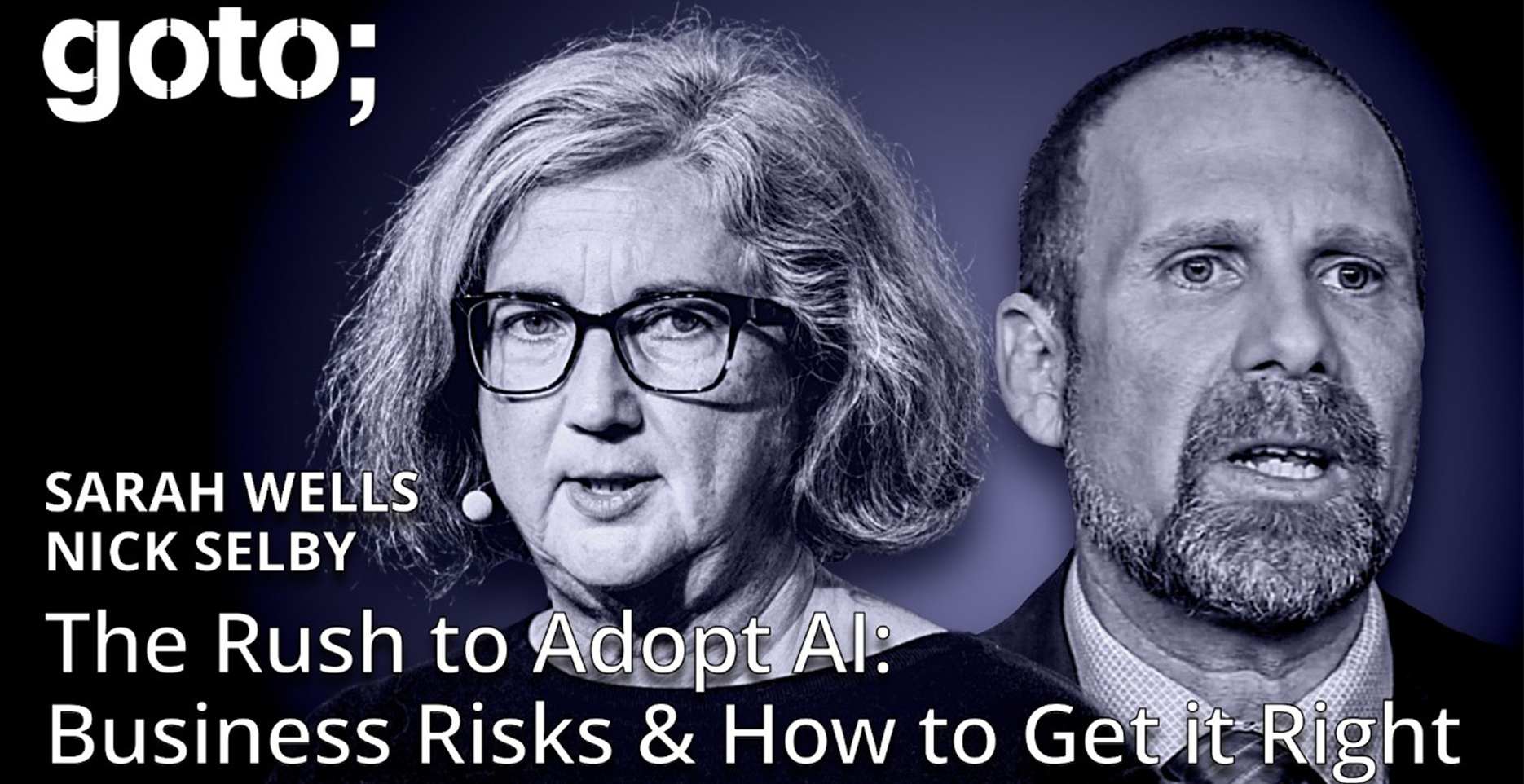
Nick Selby and Sarah Wells - The Rush to Adopt AI: Business Risks & How to Get it Right
Sarah Wells, EPSD’s Lead Consultant for Engineering Effectiveness, and Nick Selby, EPSD’s founder and Managing Partner, explore why the current rush to adopt AI tools introduces significant business risks in this episode of GOTO Unscripted. They discuss how AI vendors deliberately blur security terminology to confuse buyers, how AI tools’ insatiable appetite for data creates enormous blast radii when breaches occur, and what organizations can do to adopt AI responsibly - from threat modeling and cross-disciplinary governance to minimum-permission principles and incident readiness.
Read more
EPSD Adds Technology Sales Veteran Steve Schwartz as Executive Vice President of Revenue
Seasoned leader brings three decades of experience bridging technical solutions with executive decision-making to support EPSD’s mission EPSD, a decision-enablement advisory working with senior leaders at technology-intensive scale-ups, today announced the appointment of Steve Schwartz as Executive Vice President of Revenue. Schwartz brings over two decades of experience helping technology companies scale with discipline and clarity, building and leading global revenue organizations while partnering closely with founders, boards, and executive teams.
Read more
Nick Selby for Inc.: Preventing FOMO From Turning AI Into a Cybersecurity Nightmare
This article by EPSD’s Managing Partner, Nick Selby, appeared in Inc.’s “Innovate” section on 31 December 2025. Read the excerpt below, and please click through for the full text.
Read more
Velocity's Edge Podcast S1E9 - Nick Selby on Factionalism
When leadership is struggling with organizational dysfunction that stems from resource constraints, they tend to see teams in conflict: product versus engineering, sales versus operations, etc. They might assume the solution involves coaching, restructuring reporting lines, adjusting compensation models, or hiring more diplomacy-minded managers. But as EPSD’s Nicko Goncharoff and Nick Selby have learned through years of organizational interventions, the biggest threat to mid-stage technology companies isn’t functional disagreement. It’s the personal resentment that calcifies when strategic pivots in the business force zero-sum resource allocation.
Read more
Velocity's Edge Podcast S1E8 - Dr. Pablo Breuer on CISO Leadership
Many organizations hire Chief Information Security Officers (CISOs) expecting them to be security experts who can implement controls and prevent breaches. But as Dr. Pablo Breuer learned through 22 years in Navy cyber operations and leadership roles spanning National Security Agency red teams to Fortune 50 financial firms, the fundamental challenge isn’t technical — it’s that most companies don’t understand what they actually need from a CISO in the first place.
Read more
Velocity's Edge Podcast S1E7 - Peat Bakke on Operationalizing Decision Records
When Peat Bakke sits down for breakfast with engineering leaders, the conversation inevitably turns to the same frustrating pattern: talented people leave, and with them goes critical context about why systems work the way they do. Not just the technical details—those live in the code—but the reasoning behind architectural and technical choices, the problems those choices solved, and crucially, the alternatives that were deliberately rejected.
Read more
Velocity's Edge Podcast S1E6 - Thomas Dullien & Chris Swan on Decision Records
Most engineering leaders think institutional knowledge loss is an inevitable cost of growth. They see departing employees take critical context with them—why certain processes exist, what problems they solve, how trade-offs were evaluated—and assume the solution involves better handoff documentation or knowledge transfer sessions. But as EPSD Advisory Board members Thomas Dullien and Chris Swan learned through building and scaling organizations, the biggest risk isn’t losing people; it’s losing the reasoning behind the decisions those people made.
Read more
Velocity’s Edge Podcast S1E5 - Sarah Wells on Cultural Change
Most engineering leaders think velocity problems are technology problems. They see slow deployments and assume the solution involves better CI/CD pipelines, more developers, or migrating to microservices. But as Sarah Wells discovered as she experienced the digital transformation of the Financial Times, the biggest constraints aren’t in your codebase; they’re in your org chart.
Read more
Moneyball for Engineers
The history of management of software development is littered with failed and discredited efforts to objectively assess individual performance. There is little consensus in the industry, organizations vary widely in how they do this, subjectivity and politics are rife, and few (if any) engineering leaders are content with the status quo.
Read more
Velocity’s Edge Podcast S1E4 - Carla Geisser & Chris Swan on Crisis Engineering
As Carla Geisser puts it: “The incidents that actually matter to how people interact with technology are not security incidents … They are things like, they can’t log into their bank account, they can’t buy their Taylor Swift tickets, they can’t get on an airplane.” And when everything’s on fire, most organizations make a critical mistake: they treat the crisis as the exception rather than the expectation. The companies that survive and thrive are those that understand a fundamental truth: if your business is growing, crises aren’t anomalies—they’re predictable outcomes of scale.
Read more
Velocity’s Edge Podcast S1E3 - Melanie Ensign on Strategic Communications
Most organizations think of security communications as ‘crisis management’: what to say when something goes wrong. But waiting until an incident occurs to build relationships, establish trust, and create communication channels severely limits your response options.
Read more
“Technical Debt” and Making the Case for Engineering Work
Every engineering organization I work with has a challenge: making the case for the work you need to do as an engineering team that doesn’t directly result in new or improved features.
Read more
Nick Selby for Fast Company: Tech debt isn’t an ‘IT issue.’ It’s a business strategy
This article by EPSD’s Managing Partner, Nick Selby, appeared in Fast Company’s “Ask the Experts” section on 21 August 2025. Read the excerpt below, and please click through for the full text.
Read more
Velocity’s Edge Podcast S1E2 - Huw Rogers on Tech Debt
If you’re leading a profitable, cash-flow-positive business, you’ve probably watched technical debt pile up: those accumulated consequences of choosing quick fixes over well-designed, long-term solutions. If you’re not carefully managing it, it can become overwhelming.
Read moreVelocity's Edge Podcast S1E1 - Sarah Wells on Strategy
What makes an effective product engineering strategy? In the debut episode of the Velocity’s Edge podcast, host Nicko Goncharoff speaks with Sarah Wells about the importance of strategy to engineering effectiveness.
Read more
Announcing Velocity's Edge: Where Speed Meets Strategy
We’re thrilled to announce the launch of Velocity’s Edge, EPSD’s new podcast premiering this Wednesday. Velocity’s Edge brings you to the pivotal point where speed meets strategy—that critical spot where the wrong decision can capsize your organization, while the right one propels you forward. Each 20-minute episode delivers insights from battle-tested experts who’ve guided C-suites and boards through moments when they’ve needed to navigate crises with speed and authority.
Read more
EPSD Announces Appointment of Nicko Goncharoff as Chief Operating Officer
Technology veteran brings 30+ years of experience building and scaling data-driven businesses across global markets EPSD, the authority on technical consulting that drives business transformation, is pleased to announce the appointment of Nicko Goncharoff as Chief Operating Officer. Nicko brings more than three decades of experience building, scaling, and leading technology and data-driven businesses, including co-founding three successful startups and serving in senior executive roles at global analytics firms.
Read more